AP Human Geography › Unit 3
AP Human Geography Unit 3: Cultural Patterns and Processes
Culture is the shared practices and beliefs of a group, and it leaves marks on the landscape. Unit 3 covers cultural landscapes, sense of place, types of diffusion, and the spread of languages and religions through colonialism, trade, and modern media. Expect to analyze photographs of landscapes and explain how a trait spread. Students often confuse the types of diffusion, especially hierarchical, contagious, and relocation diffusion. Another mistake is memorizing details of religions instead of explaining their distribution and spread, which is what the course stresses.
Practice this unit
Topics in this unit
- 3.1 Introduction to Culture
- 3.2 Cultural Landscapes
- 3.3 Cultural Patterns
- 3.4 Types of Diffusion
- 3.5 Historical Causes of Diffusion
- 3.6 Contemporary Causes of Diffusion
- 3.7 Diffusion of Religion and Language
- 3.8 Effects of Diffusion
Free-response questions
- How Religions Diffuse
- Popular Culture in a Connected World
- Chinatown's Cultural Landscape
- The Welsh Language
- Diffusion and Language in the United States
Sample questions
These are taken from the Regular set, with the answer and explanation shown.
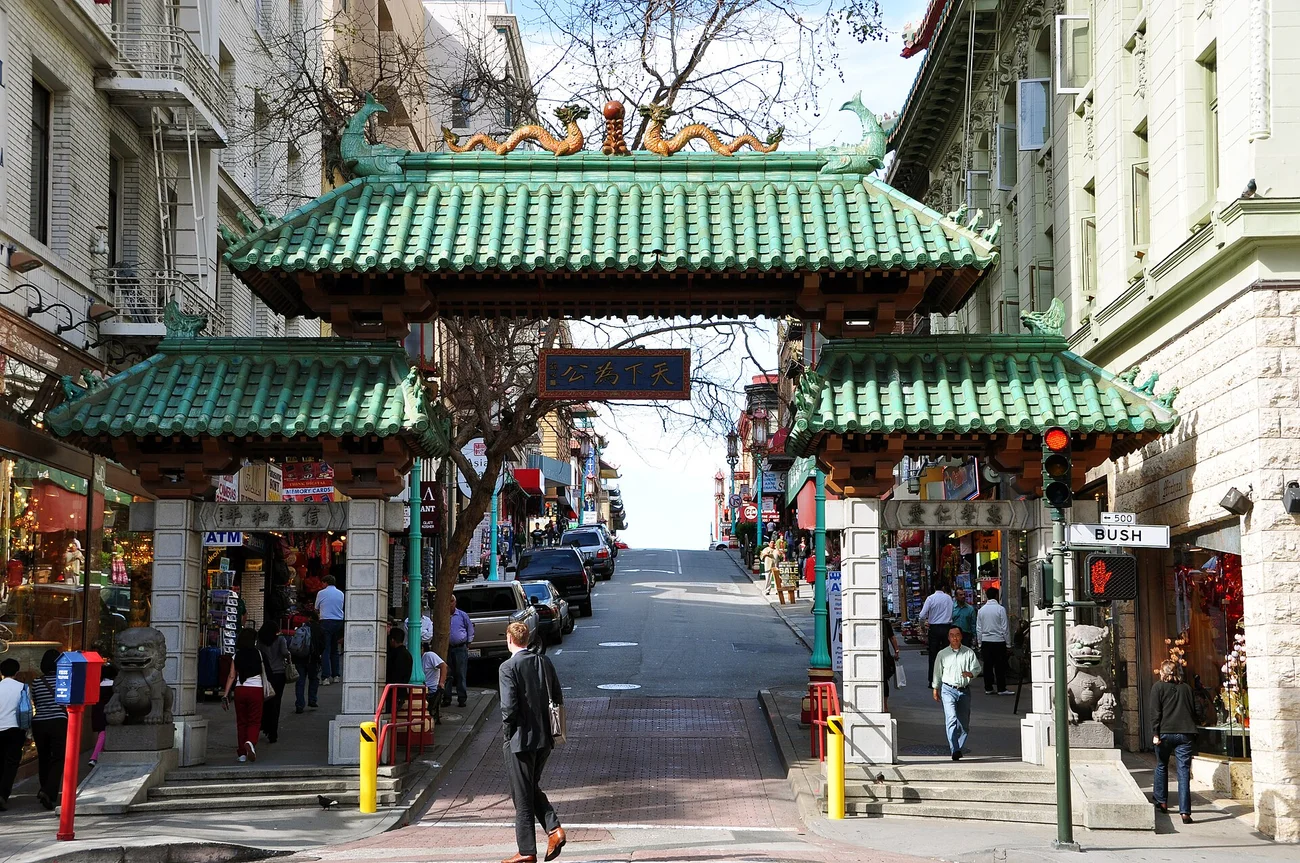
Chensiyuan, 2010, 1 chinatown san francisco arch gateway.JPG, via Wikimedia Commons. Resized/re-encoded; scene unchanged. Source · License
Enlarge source
1. A geographer uses this photograph of a gate on a San Francisco street as evidence about the city's cultural landscape. Which conclusion does the photograph best support?
- AThe neighborhood's residents have fully assimilated
- BGlobal chain stores have made the street look placeless
- CMost residents of the area today were born in China
- DChinese builders laid out the street grid behind the gate
- EA migrant group has added its own symbols to a U.S. city
Answer: E. The gate's tiled roofs, dragons and Chinese characters stand over an ordinary American street. That mix shows a migrant group, here Chinese immigrants and their descendants, marking an ethnic neighborhood in a U.S. city.
Common trap: 'Most residents were born in China' overreaches. A landscape shows a group's heritage, but birthplaces need census data. Many residents may be second- or third-generation Americans.
2. On colonial plantations in Haiti, enslaved Africans who spoke many different languages developed a new language that combined mostly French vocabulary with features of West African languages. Today it is the first language of most Haitians. Which process does this describe?
- AAssimilation
- BLingua franca
- CStimulus diffusion
- DLanguage extinction
- ECreolization
Answer: E. Creolization is the blending of languages or cultures into a new form. Haitian Creole began as a contact language and became people's first language, which makes it a creole.
Common trap: Lingua franca is tempting because the language helped groups communicate. But a lingua franca is a shared second language. Haitian Creole became a first language, so it is a creole.
3. Many grandchildren of Norwegian immigrants who settled in Minnesota in the 1800s speak only English and no longer attend Norwegian-language churches. Which effect of diffusion does this best show?
- AAcculturation
- BSyncretism
- CMulticulturalism
- DStimulus diffusion
- EAssimilation
Answer: E. Assimilation is when a group's distinct cultural traits are largely replaced by those of the host society. By the third generation, the immigrants' language and churches have mostly given way to English and mainstream practices.
Common trap: Acculturation is the trap. It describes partial change, with heritage traits kept alongside new ones. Here the heritage traits have mostly disappeared.